Brief Biography
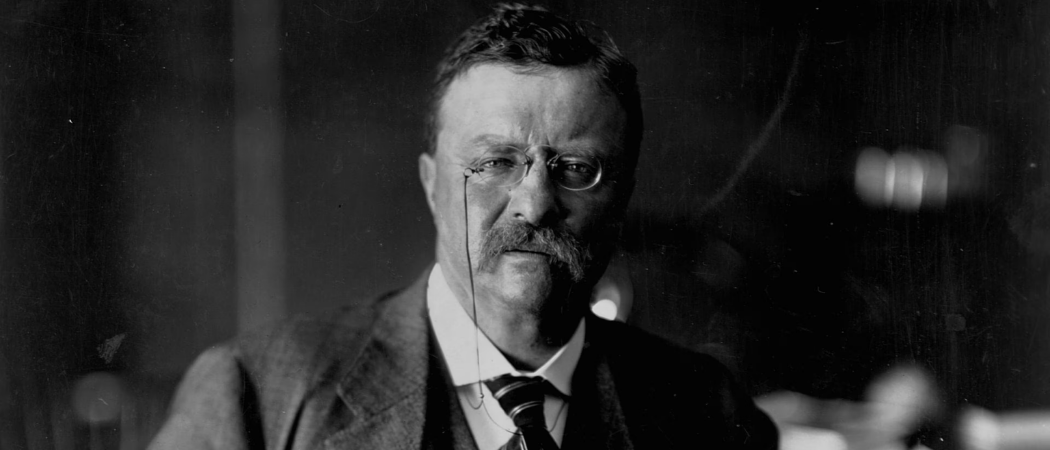
Early Life and Rise to Leadership
Theodore Roosevelt is best remembered as the twenty-sixth President of the United States, but his energetic and multifaceted life made him a hero to millions for far more than his presidency. By the time he assumed the office at age 42—the youngest person ever to do so—Roosevelt had already held a remarkable list of public roles. These included New York State Assemblyman, deputy sheriff in the Dakota Territory, Police Commissioner of New York City, U.S. Civil Service Commissioner, Assistant Secretary of the Navy, Colonel of the Rough Riders, Governor of New York, and Vice President.
Scholar, Naturalist, and Explorer
Beyond politics, Roosevelt’s intellectual and naturalist pursuits were equally impressive. He was an original member of the American Institute of Arts and Letters and helped found both the Boone and Crockett Club and the National Collegiate Athletic Association (NCAA). As a historian, he served as president of the American Historical Association, while as a naturalist, he became a respected authority on large American mammals. His passion for exploration led him to spearhead major scientific expeditions in South America and Africa for leading U.S. museums.
Personal Life and Passions
Even amid his professional demands, Roosevelt embraced an energetic personal life. He ranched in the West, hunted on several continents, and raised six lively children. A voracious reader and prolific writer, he devoured books—often one a day—and authored more than thirty-five himself. His correspondence habits were legendary: he penned over 150,000 letters, maintaining a vast network of friends around the world.
Transforming the Presidency
As President, Roosevelt strengthened the office of the chief executive, establishing it as the central force in the federal government and defining what became the modern presidency. He rejected the hands-off approach of laissez-faire economics and sought fair play and accountability in American business. His trust-busting efforts curbed corporate monopolies, while key reforms such as the Elkins Act (1903), Hepburn Act (1906), and Federal Employers’ Liability Act improved business practices. Consumer protections flourished through landmark laws like the Federal Meat Inspection Act and the Pure Food and Drug Act of 1906, which paved the way for today’s Food and Drug Administration.
Expanding America’s Global Role
Roosevelt propelled the United States onto the world stage as a major power. He mediated an end to the Russo-Japanese War, earning the Nobel Peace Prize, and intervened in international disputes involving Venezuela, the Dominican Republic, and Morocco. Pioneering global diplomacy, he was the first world leader to bring a case before the Court of Arbitration at The Hague and to call for a second Hague Peace Conference. Roosevelt also championed the construction of the Panama Canal and expanded U.S. naval power, sending sixteen battleships—the “Great White Fleet”—on a global voyage to demonstrate American strength.
Legacy in Conservation
Arguably Roosevelt’s greatest contribution was his dedication to conservation. He established 150 National Forests, 51 Federal Bird Reservations, five National Parks, 18 National Monuments, four National Game Preserves, and 21 Reclamation Projects. Altogether, he placed nearly 230 million acres—an area roughly equal to all the East Coast states from Maine to Florida—under federal protection.
Later Years and Enduring Influence
After two presidential terms, Roosevelt sought the office again in 1912 as the leader of the Progressive or “Bull Moose” Party. Though his third-party bid was unsuccessful, many of his ideas later shaped the policies of Presidents Woodrow Wilson and Franklin D. Roosevelt.
In his final years, Roosevelt was a strong advocate for national defense and military preparedness. He died at his home, Sagamore Hill, in Oyster Bay, New York, on January 6, 1919, at the age of 60. Though critics labeled him a militarist and political opportunist, his energy, vision, and ideals profoundly shaped modern America. His face carved into Mount Rushmore stands as a lasting symbol of his impact and the values he embodied.
The President
The Hunter
The Soldier
The Family Man
The Conservationist
The Author
The Naval Strategist