What fueled Theodore Roosevelt? Coffee.
America’s most indomitable president kept his energy levels high with gallons of it. He drank his first cup of strong, black coffee as a young boy when doctors administered it as treatment for Roosevelt’s asthma. Caffeine does have a mild relaxation effect on bronchi and respiratory muscles, but it never cured Roosevelt of the terrifying asthma attacks. It did spark a taste for strong coffee. He drank it black – with sugar – for the rest of his life.
As a rancher in the Dakotas, a soldier in the Rough Riders, or a bureaucrat in Washington, Roosevelt rejoiced in coffee and wrote about it as a blissful distraction that could generate mass appreciation. By the time he became president, Roosevelt’s appetite for coffee had become legendary. He drank one, and sometimes two gallons a day. His eldest son described his father's enormous custom-made coffee cup as “more in the nature of a bathtub” than an ordinary drinking vessel. His daughter Ethel said that no other family member “had such a large cup.” And by the time he was president he had become a connoisseur. In 1903, he had tasted Puerto Rican coffee. Puerto Rico had become an American territory in 1898, and Roosevelt took an interest in the commercial exports of the island, chief among them coffee. He ordered kitchen staff at the White House to stock Puerto Rican coffee exclusively – at his expense!
Maxwell House made much of Roosevelt’s love for coffee. When the president visited Nashville, he sipped on the local coffee and purportedly said “This is the kind of stuff I like to drink.” The coffee came from the Maxwell House Hotel, which served a variety of coffee brands. Almost a decade later, the hotel began a marketing campaign with the slogan “Good to the Last Drop” and because Roosevelt had a penchant for witty catchphrases it was attributed to him. Maxwell House did nothing to stop the myth from growing at first. Many years later, General Foods – the parent company of Maxwell House – acknowledged the slogan had no connection to Roosevelt.
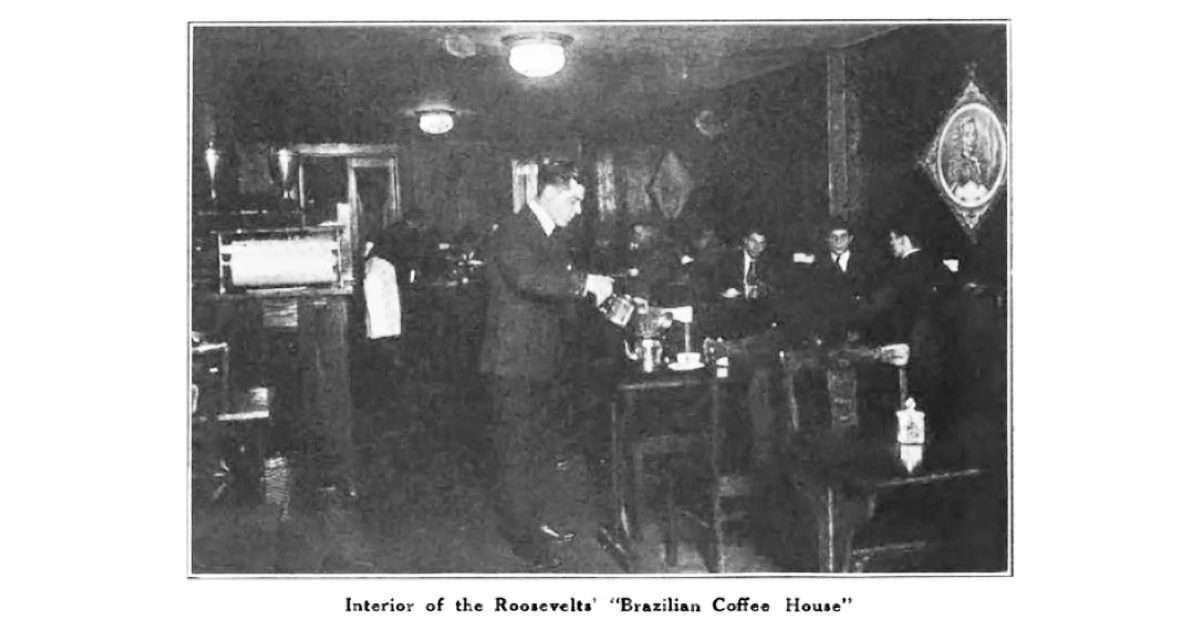
But the Roosevelt family did have its own chain of coffee houses. After spending time in South America, Roosevelt’s son Kermit was inspired by the region’s coffeehouse culture. Coffee was fresh ground and customers would spend time relaxing in the cafe, much like modern cafes. At the time, New York had coffeehouses, but they were primarily for patrons on the go or diners that served breakfast and lunch. Any sit-down cafes served percolated coffee from canned and pre-ground beans. Some even served instant coffee. Kermit predicted that New Yorkers would favor quality coffee and a slower pace. In 1919, he asked his brothers Ted and Archie and his sister Ethel to join his venture along with Philip Roosevelt who would become the company president. They opened their first café on 108 West 44th Street and called it “The Brazilian Coffee House.” Ethel Roosevelt designed the interior with a green-and-gold bamboo wallpaper and photos of famous coffee lovers. Naturally, a photo of Theodore Roosevelt adorned the walls.
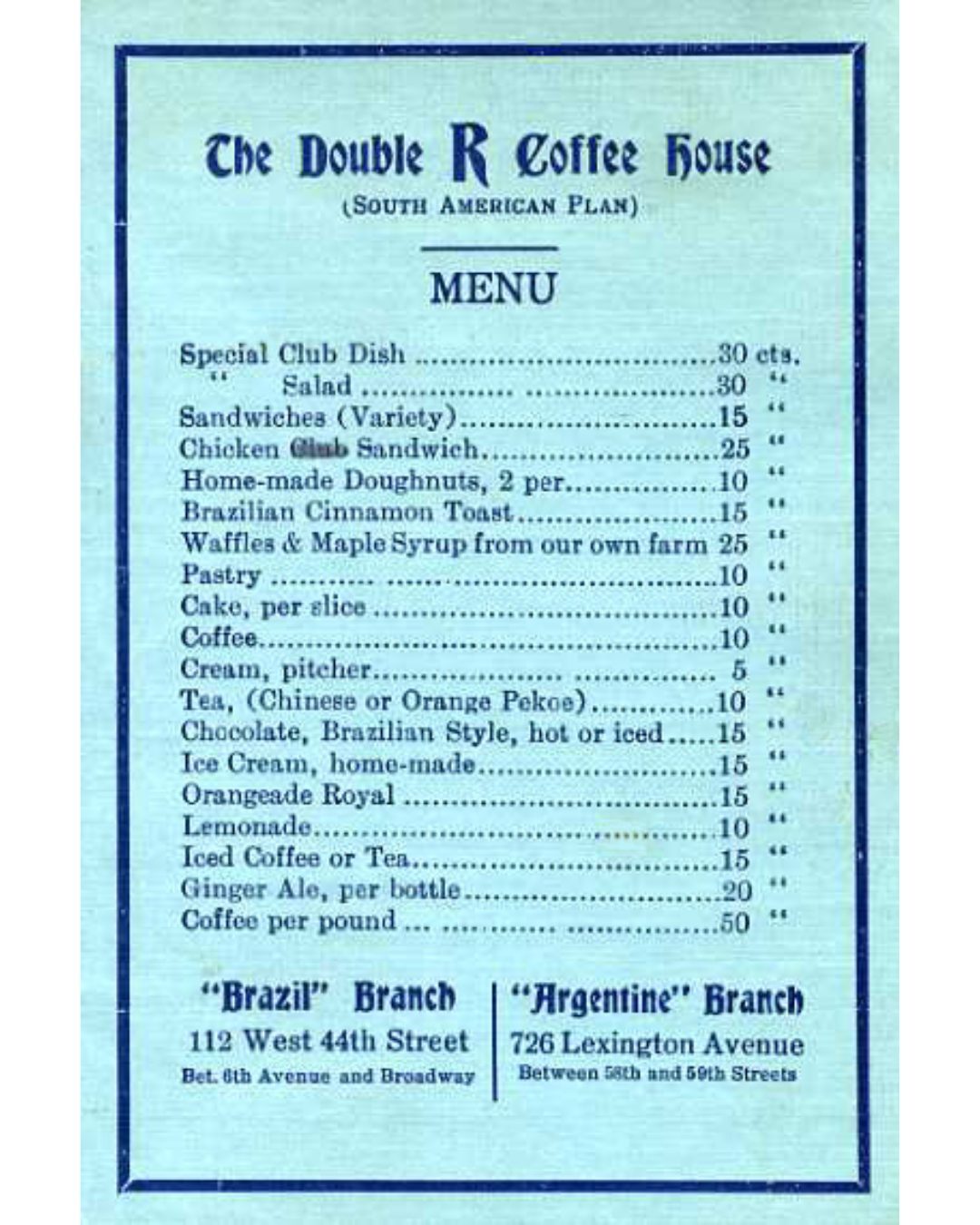 Menu of the Double R Coffee House
The business changed its name in 1921. Another company had traded under the Brazilian Coffee House name, and the family chose to call the café The Double R Coffee House after the Roosevelts and Robinsons (Theodore’s sister Corinne married Douglas Robinson who joined the business in 1920). The enterprise grew to four cafes in Manhattan and the families considered expanding to other major metropolitan centers. Keeping the momentum going among several Roosevelts who had varying interest in the business ultimately led them to sell in 1928.
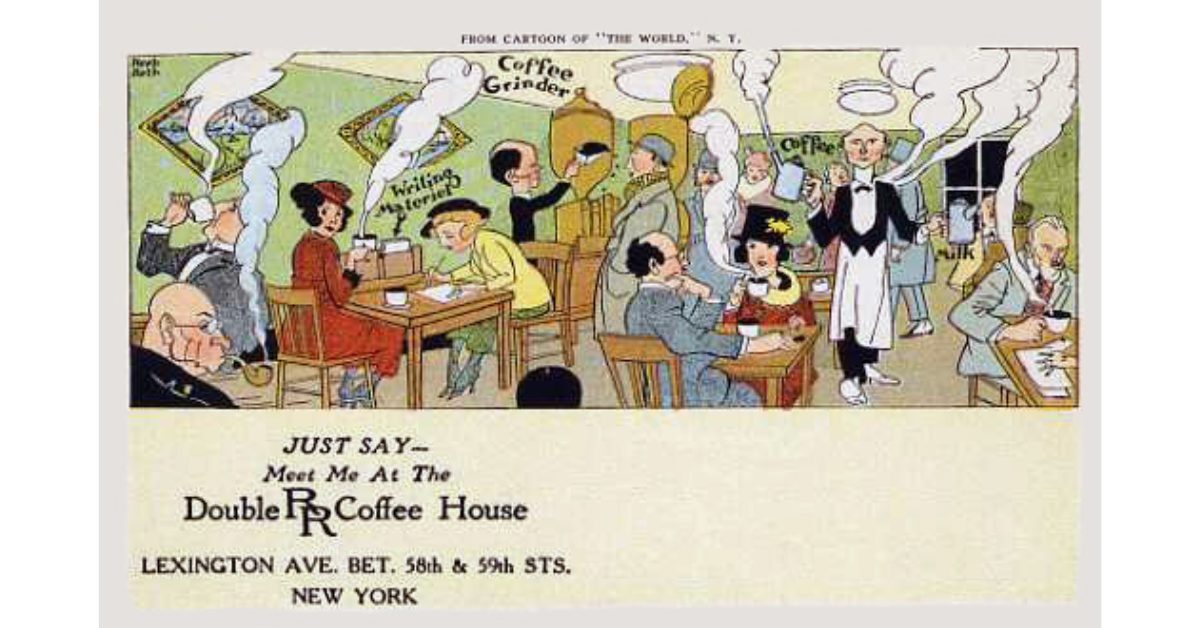 Cartoon from The World advertising the Double R Coffee House
What remains of the Roosevelt legacy in the coffee world? Three things live on: passion, quality, and pleasure. Theodore Roosevelt instilled a passion for coffee in his family and understood what made a good cup of Joe. He found pleasure in those moments when a hot, sweet coffee could change his mood. His children founded the movement to make cafes neighborhood institutions where people meet, work, and collaborate. They brought slow roasting and grinding to the customer. They deindustrialized the product and made it about enjoyment and leisure.
Today, we owe much of our contemporary relationship with coffee to the Roosevelts.
Written by TRA Public Historian, Dr. Michael Cullinane, November 2026